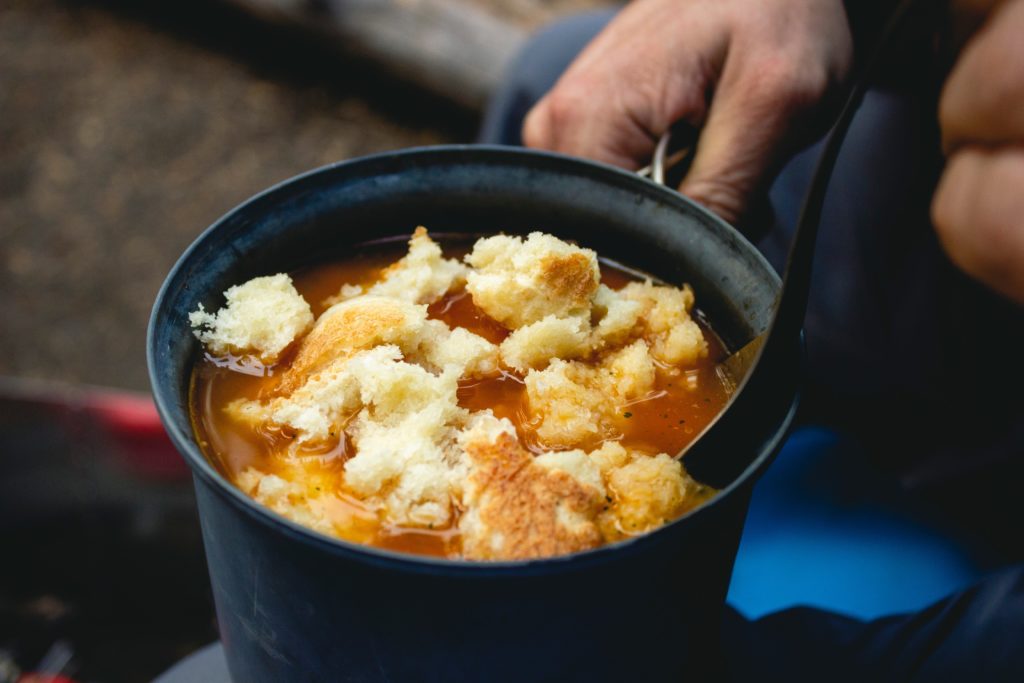
72 Hour Kit – Food

In an emergency, food is actually pretty far down the list of necessities. The average person can go weeks without food.  But in a disaster you are likely to be working harder and doing more than you normally would. You’ll probably get irritated and fatigued easily in an emergency, so you should make food an important part of your emergency plan.

When picking what food to put in your emergency kit, you should choose food that’s lightweight, shelf stable, and as well balanced nutritionally as possible.  Another consideration, especially when involving children, is to make sure it is something that you are willing to eat.  The last thing in a disaster that you want is food that is unappealing to eat.

Here are some food options that we recommend:

MREs

Consider Meals Ready to Eat (MRE’s).  These were originally used for military applications. Previously, the only way to get them was from military surplus or speciality stores.  However, most of the MREs you see today maintain the same look and feel, but are not from military overstock.  A number of companies now make MRE meals for camping, hiking, and emergency preparedness.  There is a large variety of meals, side dishes, and even desserts to choose from. 

Advantages

MREs are shelf stable at room temperature for 5+ years.  Typically they come in a foil lined pouch that you simply heat by using a MRE heater or by placing in a pot of hot water.  Wait a few minutes, tear off the top and eat straight from the package.  They are very convenient, have a good variety and are safe to consume. 

Disadvantages

Most MREs were designed for soldiers in combat and calorie count can be high.  They weigh more than freeze-dried meals and can be expensive compared to fresher foods and some freeze-dried options. Some people may not like the taste of MREs.

Freeze Dried Meals

Another option is freeze dried meals.  

Advantages

Freeze dried meals weigh very little and you can pack a lot in a much smaller space.  Freeze drying also retains nutritional value better than most other preservation methods and often the process preserves the actual color and shape of the original food.  Most freeze dried products are shelf stable for as long as 25 years depending on the packaging and storage environment.

Disadvantages

Water is required for reconstituting freeze-dried meals.  You will need to include extra water to account for your meals.  Some products are great once reconstituted. Others – not so much.  Some people dislike the dry, styrofoam-like texture that many freeze dried food take on.

A Few Extras

In addition to the commercial options there are a number of things you can add to your kit that will make life more enjoyable, should the worst ever happen.  For example, you can add items such fruit cups, granola bars, instant oatmeal, a bag of hard candy, and a pack of gum.  These will need to be rotated out more often, but that little extra goes a long way when stuck in a shelter or working hard on cleanup of a home after a disaster. 

 Don’t forget about your pets. We store three days’ supply of food and water in a kit for our family dog.  She has her own pack and is responsible to carry all her own supplies.

What food you put in your 72 hour kit is personal.  For our family, we tried a variety of MREs, made a list of the ones we liked, the ones we did not like, and the ones we would rather starve than eat.  We try to purchase only the ones we like.  We found we did not like any of the breakfast items in any MREs, so we use freeze-dried breakfast items like the scrambled eggs that we found acceptable.  We added to our kits some fruit cups, granola bars, instant oatmeal, and a small supply of candy.  I might have snuck in a bag or two of beef jerky. 

We go through our packs every 6 months and rotate out the food that needs it.  Typically the freeze dried and MREs rotate out every 3 – 4 years and the rest every six months.  You should also figure out what food options work best for your family.
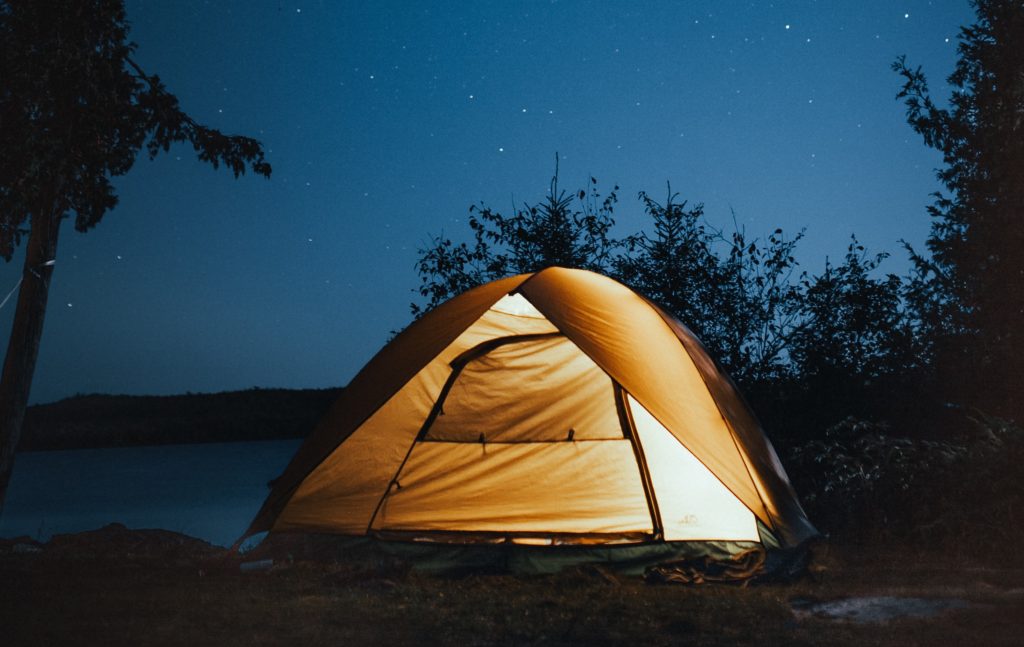
72 Hour Kit – Shelter

Photo by Josh Hild from Pexels

In a disaster, your living situation may be disrupted.
For your shelter needs, you’ll need to think about clothing and housing.

Clothing

Having clean, comfortable, weather-appropriate clothing is a must in an emergency. Make sure that the clothes that you store in your kit fit, are appropriate for work and school, and meet the needs of your climate. And be sure to review regularly the clothing that you’ve stored, or you might end up in a situation like what our family faced.

About nine years ago, we had a house fire. We grabbed our 72 hour kits, and watched the fire fighters fight to save our home. We were put up in a hotel for the next few weeks as the damage was repaired.

The next few days, we realized that the clothing that we stored in our kit was not appropriate for our situation. Even though we were temporarily homeless, we still had to go to work and school. I showed up at work in the only clean shirt that I had, a Red Cross Disaster response volunteer shirt. I always expected I would assist during a disaster, not need to go back to work. My kids had the same issue. My daughter declared that she wouldn’t be caught dead at school in the clothes stored in her 72 hour kit. And my son had grown a few inches, so his 72 hour kit pants were closer to his knees than his ankles.

We learned from this experience, and now we review our clothing choices every six months.

Housing

When it comes to shelter, a good motto is to prepare for the worst and hope for the best.  Ideally, the best option would be to shelter in our own home.  But the response for some emergencies is to shelter at a different place.

As a Red Cross volunteer who’s set up shelters for numerous hurricanes on the East Coast and fires in the West, I’ve noticed the following about shelters:

In a disaster, someone from the Red Cross evaluates the need for shelter in an affected area. If the area is small, such as a house or apartment fire, the Red Cross puts the families up in a hotel. For larger disasters, the Red Cross sets up a shelter, usually in a high school gymnasium. Some people choose to stay with friends or family. Some people choose to camp in their car or outdoors. You should be prepared for all of these events.

Take advantage of available resources to make this time as comfortable as possible. A tent and sleeping bag is never a waste. You should pack gear to handle bad weather, such as hand and body warmers, lightweight blankets and fire-starters. And finally, make sure that your shelter aids are close by in case of evacuation. We store our sleeping bag and tent in a separate box next to our 72 hour kits in the garage. That way, in an evacuation, we can quickly throw the box into our car and go.

How to prepare for an epidemic

With all the news and worry about the Coronavirus lately I keep being asked “How can I prepare” or “What should I do?”  I’d like to take a moment and address some of these questions.

It’s important that we understand some of the facts about SARS-CoV-2 and the disease it causes, Coronavirus (abbreviated “COVID-19”).  Coronaviruses are actually part of a large family of viruses that are common to animals and people. 

The symptoms of Coronavirus range from that of a mild cold to a severe flu.  As of the date of this article Coronavirus has killed slightly over 3300 people worldwide and 11 people in the United States.  Most experts are quick to point out that if you are truly worried, you should be paying more attention to the common flu. According to the CDC, so far this year the flu in the United States has infected 32 million people and killed over 18,000.  So, is there something to worry about, yes. But is it also likely that this one is just getting a little more press than it deserves.

To begin . . .

Rule number 1 – Don’t panic.  Even as this virus breaks the quarantines and makes its way to the streets of every town, USA, the world is not going to end.  The vast majority of people who get infected live. The flu is currently worse and far more dangerous to you as an American citizen.  Assuming calmer heads prevail, everything will return to normal as this virus runs its course.

CDC recommendations

The CDC, DHS and other organizations have made a number of very excellent recommendations to do TODAY, in advance of an outbreak.  Let’s review a few of them.  

Wash your hands

According to the American Red Cross this is the number one thing you can do to prevent disease transmission.

Get a Flu Shot

Yes, I know that this treats the flu not Coronavirus, however there is some evidence that it may help, keeping you more healthy to fight anything else that comes along.

Store a two week supply of food and water

If you don’t already have a start on a year supply, just ask yourself one question.  If all the stores closed right now, could you survive two weeks? What are you missing? Don’t go out and break the bank or go into debt for this.  An extra case or Top Ramen or a 20 lb bag of rice can go a long way for just a few dollars.

Keep a supply of your prescription and non-prescription drugs on hand

Include pain relievers, stomach remedies, cough and cold medicines and fluids.

Review your medical options

Make sure you know where your medical insurance cards are located and talk with your family about what you might do should something go wrong.

The worst case scenario

But what if calmer heads don’t prevail.  What if the stock market continues the current decline.  What if there is a run on grocery stores and supplies get hard to find.  What if things do go bad?

Don’t Panic –  You are prepared for this, now exercise your plan

Wash your hands –  Then wash them again.  And once more for good measure.  A good hand sanitizer after washing is a good idea. 

Stay Home if Sick – Don’t spread what you have around.  If your co-worker comes to work sick. Give them a very hard time about it.  If you are the boss, tell your employee to not get everyone else sick. Avoid contact with people who are sick.

Cover your mouth and nose – Don’t sneeze on everything and everywhere.  Keep the germs to yourself.

Call your Doctor – If you live in a community where COVID-19 has been detected and you develop symptoms, call your doctor.  Let them help you decide the best course of action.

Limit Travel – Travel only if you have to.  On your return follow recommended guidelines and consider a self quarantine if you have any question at all about your exposure.

Practice Good Health Habits – Get good sleep, eat well.  Drink plenty of liquids and get a little physical activity.

One last thought.  Check your news sources.  Twitter and Facebook are among the worst places to get information about the current situation.  I suggest that you check the facts presented in this article against the latest information from the experts at the Center for Disease Control, The World Health Organization, The American Red Cross.  Oh, and wash your hands!

Links Provided below:

https://www.ready.gov/pandemic

https://www.cdc.gov/coronavirus/2019-ncov/index.html

https://www.redcross.org/get-help/how-to-prepare-for-emergencies/types-of-emergencies/flu-safety.html