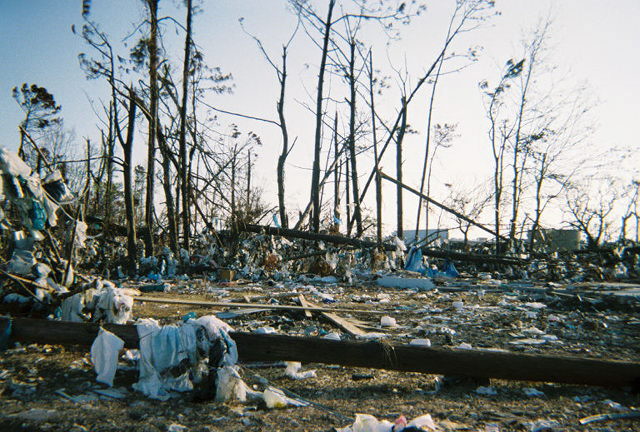
In the aftermath of Katrina
As I drove through the streets of Waveland after Hurricane Katrina, I noticed a stark difference between different neighborhoods and sometimes even house to house. The circumstances were often the same. Two families. Both of them living in what was left of a partially destroyed home. No electricity, no running water, no food, often no utilities of any type. The roof was ripped off half of the house and a rain storm expected tomorrow.
What was different was that at one house there would be hopelessness. A lack of direction and no plan for what might come next. We would arrive at their door and they would gladly accept any help we could give but would often have no idea even what to ask for. We would have to remind them that they needed such basics as water, food, or medicine. It was not that these people did not know. They were in shock and were not thinking clearly and we disaster responders spent a lot of time helping them sort out and formulate a plan for survival.
While the family next door would be full of hope and anticipation. We would arrive and they would often answer the door and say, “We are just fine. Go find people who really need help. We will survive.”
We would point out that they were almost out of food, water, or some other essential and they would often say “But we still have some and we will send for help when we need more.” We would explain that we were the help and restock their supplies, often forcing on them more than they wanted to accept. They were more worried about their neighbors. Many of these homes had already moved the neighbors in and were sharing the meager supplies they had.
There was a night and day difference between the two homes. Sometimes neighbors. And a distinct pattern quickly became very clear. Those families or neighborhoods who had invested a little bit of time into preparation for a disaster were consistently in far better shape both physically and mentally than those who made no plans.
What made the difference?
As I visited many other disasters over the years, I started looking into this in more detail to see if there was one key factor that seemed to make the difference to those that were all but falling apart and those that were acting like this was an unplanned family campout. What I discovered was simple. In nearly every case the difference was a few minutes of planning. That forethought to put together a few items in a safe place, set a family meeting spot, and discuss openly the what if scenarios with the family.
It did not seem to matter what kind of 72 hour kit they had. Some called it a bug-out bag. To others it was the bucket of stuff that they hoped never to us. To most it represented a few hours of discussion and a small investment into a few items they decided they could not live without.
Why 72 hours?
In the event of almost any real emergency or large scale disaster, 72 hours is roughly the amount of time that you can expect it to take before you see any help from anyone outside your immediate neighbors. In a typical disaster, the phone system will be overwhelmed and go offline in minutes. What few services do work will be rerouted and devoted to emergency response.
If a large earthquake hits Salt Lake and Utah Counties, there are a few things you should expect. Local 911 services will be offline or busy for days. Response time from fire and police will likely be non-existent in residential neighborhoods for at least 3 to 5 days.
The local Red Cross office will immediately activate, but the majority of their local volunteers may be busy taking care of their own families. The National Red Cross and many other organizations will respond, but it will take about 72 hours before any real presence will be noticed. The more rural you are, the longer it may be before you see anyone.
Local hospitals and medical services will recall all their staff, but an estimated 30% may be unable to respond. The same goes for police and fire although the numbers were much worse after Hurricanes Katrina and Sandy.
What can you do?
The bottom line is, in a large disaster you must assume that you are on your own for the first 72 hours. Longer if you are not in a large city. Roads in Utah are likely to be impassable. Estimates are that it could take as long as a day for each 15 minutes of drive time for your commute to get home. That means that a drive to the Salt Lake airport from Orem in the initial days after a major earthquake could take three days.
Put some thought into this. Talk with your family. Formulate a plan. What would you do if the earthquake happens during the day while everyone is at work or school? What about evenings or weekends? Do you need to keep your 72 hour kit in your car instead of at home?
I have seen a lot of disasters. I have seen a lot of people survive and live to tell the tale. With just a few moments of thought and preparation and a few items stored in a bag in the garage, the stress level of a disaster can be moved from barely scraping by to that of an extended family camp out.
72 hours is roughly the amount of time that you can expect it to take before you see any help from anyone